
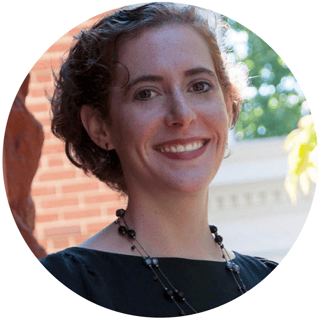
Laura Albert
Associate Professor of Industrial and Systems Engineering, University of Wisconsin-Madison
What is your favorite O.R. application?
I’ve been fascinated by how important and interesting homeland security problems are. Homeland security—like any application area—waxes and wanes in popularity. Homeland security problems do not always seem shiny and new and exciting, especially so many years after September 11, 2001, but I am frequently reminded that we will always have security challenges. It’s a great application area.
View Laura Albert's StORy here.
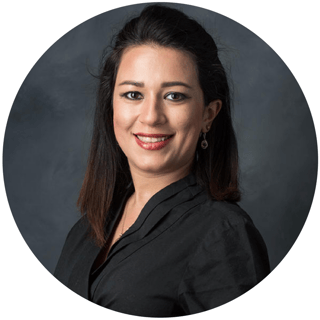
Banafsheh Behzad
Assistant Professor, Information Systems Department, College of Business Administration, California State University, Long Beach
What prompted you to enter this field? Why?
Operations research is a very exciting field. On the methodological side, it offers a wide range of problem-solving techniques. In terms of the application, one has the option to choose the real-life problem of interest with the goal of better decision making and efficiency. It is very interesting to have the opportunity to work on a research project and see the real impact of it on society.
View Banafsheh Behzad's StORy here.
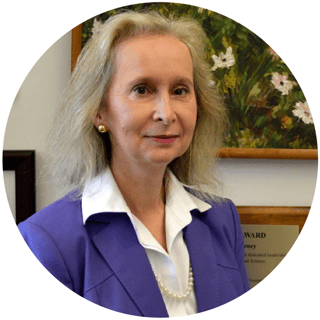
Anna Nagurney
John F. Smith Memorial Professor of Operations Management at the Isenberg School of Management at the University of Massachusetts Amherst, and director of the Virtual Center for Supernetworks.
What is the best advice you can give to students in your field?
Operations research is a very exciting, creative, dynamic discipline that will open many doors for you on your life's journey. Obtain as many skills as you can while a student in terms of modeling and math, algorithms, and their development and implementation, and coding, and find applications that you are passionate about. After graduation, professionally you will continue to learn and your interests will evolve. Having excellent foundations will help to support you and give you confidence and build your reputation. Make sure that if there is an INFORMS Student Chapter at your university that you join it and do become an active member. You will advance your leadership and communication skills and meet many outstanding researchers and practitioners through speakers, programs, and other activities. Your network will grow. If you are a graduate student, start going to INFORMS conferences as soon as you can. You will make lifelong friendships through INFORMS communities, learn a lot, and have wonderful adventures and fun!
View Anna Nagurney's StORy here.
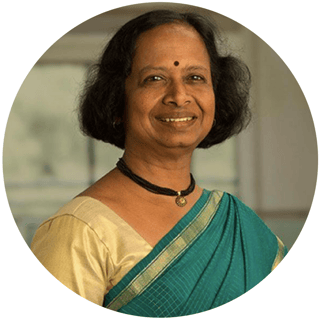
Radhika Kulkarni
Vice President, Advanced Analytics R&D,
SAS Institute Inc.
What prompted you to enter this field? Why?
I came to Cornell University to do a PhD in mathematics. During my first semester I took a class in mathematical programming and loved the idea of the fundamentals of a decision-making process: finding an optimal value given some levels you can control subject to immutable constraints. The idea of looking at problems in this framework attracted me to the area of operations research and I switched to the PhD program in O.R. I have not looked back on that choice.
View Radhika Kulkarni's StORy here.
.png?width=320&name=Untitled%20design%20(1).png "polly_analytics_women")
Polly Mitchell-Guthrie
Director, Analytical Consulting Services, UNC Health Care
What is the best advice you can give to students in your field?
Learn as much as you can about as many different opportunities and areas as you can and then listen to your heart when deciding which direction to pursue upon graduation. Many people around you will have opinions and advice as to what you should do, but you know yourself best. You can always change directions in the future, so don't be afraid to take a risk.
View Polly Mitchell-Gurthrie's StORy here.
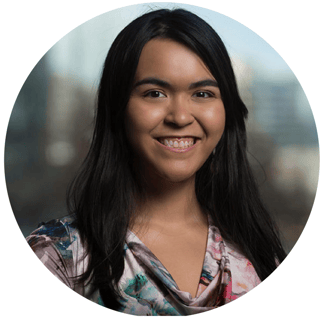
Amanda Andrei
Senior artificial intelligence engineer, MITRE Corporation
What prompted you to enter this field? Why?
I became involved in the area of social media analysis when I was awarded an Early Career Research Project (ECRP) from MITRE. My topic was studying mixed-language social media in the Philippines. Around the time I started working on this project, Typhoon Haiyan/Yolanda hit the Philippines, and I focused on analyzing the Twitter communication emerging from the country. Since then I’ve applied social media analysis to various other topics, including healthcare and judiciary reform.
View Amanda Andrei's StORy here.
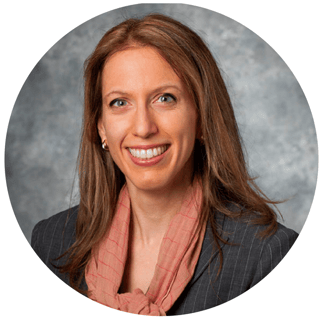
Aurélie Thiele
Associate Professor, Engineering Management, Information and Systems, Southern Methodist University, Dallas, TX
What do you think is next for operations research?
I think the most successful academic programs in O.R. are moving toward more tightly integrating classroom learning with real practical experience through high-touch mentoring. Massive Open Online Courses (MOOCs) have only highlighted the hunger of participants for real, pointed feedback from a live person who knows them by name and challenges them to their individual edge. MOOCs are a useful backup option, as well as a marketing tool. I also think O.R. will be paired more and more with ethical decision making, and I’m not just saying that because I work at a university founded by the Methodist Church. As we are moving toward big data and prescriptive analytics, we have a duty to use our knowledge of math in a responsible way.
View Aurélie Thiele's StORy here.
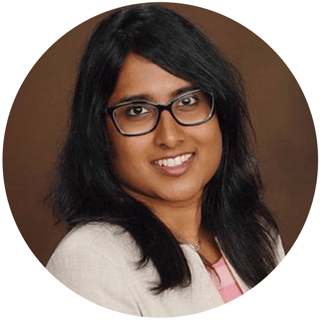
Sudharshana Apte
Research Scientist, Altria Client Services
What do you think are the most significant barriers for women/minorities in analytics careers? How could they be remedied?
I believe the most significant barriers for women in analytics careers, at least in industry, has been the lack of strong, positive role models and appropriate training. In order to overcome these barriers, women need to network more and develop skills that will help them succeed. It is great to see the tides begin to turn, as more and more women are breaking the glass ceiling and successfully balancing their work and life.
View Sudharshana Apte's StORy here.
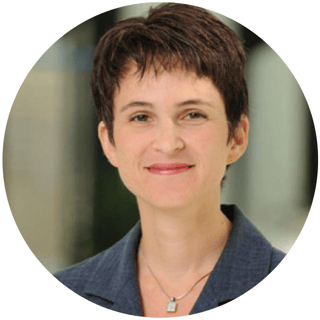
L. Beril Toktay
Brady Family Chair and Faculty Director of Ray C. Anderson Center for Sustainable Business, Scheller College of Business
What are current issues/trends/challenges in sustainable O.R.?
Developing models and solutions for a circular economy, engaging productively with business strategies that relate to climate change, expanding sustainability from a primary focus on environmental issues to social issues and business-community engagement.
View L. Beril Toktay's StORy here.
Kayse Lee Maass
PhD candidate, Department of Industrial and Operations Engineering (IOE), University of Michigan
What is your favorite O.R. application?
Combating human trafficking has been a passion of mine since I was a young girl. As such, I’ve recently taken an interest in learning how operations research can be applied to anti-human trafficking efforts. Despite the fact that human trafficking is universally recognized as a growing problem, little quantitative analysis has been conducted in this area. Thus, as operations researchers, we are uniquely positioned to help answer questions related to evaluating the effectiveness of anti-trafficking policies, scheduling fair trade inspections, understanding the composition of trafficking networks, balancing differing objectives in multiagency collaboration, and many other topics.
View Kayse Lee Maass' StORy here.
Rozhin Doroudi
Research Assistant at Northeastern University
What do you think are the most significant barriers for women/minorities in OR/MS careers? How could they be remedied?
Mental barrier that they don't "belong" to this field. By saying this, I am not trying to undermine the existing systematic discriminations against these groups, but I think overcoming this mental barrier is a very effective step. Seeing more women/minorities in this field especially in leading roles can be very encouraging. Therefore, having female mentors or mentors from minority groups can be a great help. Also, being part of a minority supporting group like Women in OR/MS and Women in STEM is a way of getting involved in an active movement toward a less discriminated work environment.
View Rozhin Doroudi's StORy here.
Lauren Steimle
PhD Candidate in Industrial and Operations Engineering, University of Michigan
What prompted you to enter this field? Why?
My first taste of operations research came in a high school computer science class when I had to write code to simulate the flow of cars through a hand car wash. My teacher gave us the challenge of designing this simulated car wash to make it run more efficiently. After that project, I kept noticing examples of systems that could be improved using the kind of analysis that I did in my computer science class. It wasn’t until college that I realized there was a whole field dedicated to solving these kinds of decision-making problems. While the O.R. classes that I took were great, it was undergraduate research that really pushed me to pursue a career in this field. For my undergraduate research project, we investigated how to use optimization for scheduling electricity usage in a smart grid to better balance the supply and demand of energy. Further, we analyzed incentives that would encourage consumers to follow the optimized schedule. This project was an exciting way to use O.R. to work on a problem of societal importance. This combination of optimization and the potential for positive impact on society convinced me that this was the field for me.
View Lauren Steimle's StORy here.
Trilce Encarnacion
Researcher, Rensselaer Polytechnic Institute
What do you think are the most significant barriers for women/minorities in OR/MS careers? How could they be remedied?
This is such a complex topic, one that I feel very passionate about, but cannot do justice in just one paragraph. Studies exploring the obstacles to female leadership abound, many citing biases from current leaders and higher standards. In my personal experience, I can attest to the effect that a lack of role models can have in forming a young person's idea of what professional life looks like. It took me longer than my peers to realize that I wanted to pursue a PhD, because growing up in the Dominican Republic, there were not many PhDs that I could look up to. When I was an undergraduate, getting an MS seemed like the highest reasonable degree. I think that my experience can be translated to many women and minorities who do not have access to role models growing up. I think that one way we can improve things is to redouble efforts to engage these groups in middle and high school, and show students all the possibilities that these careers can offer.
View Trilce Encarnacion's StORy here.